(12m read)
Take a walk through almost any park, woodland or even suburban garden in England and the chances are you'll spot a grey squirrel scampering along a tree branch, burying an acorn or boldly approaching people in search of food. They have become such a familiar sight that many people assume they have always been part of Britain's wildlife. For many of us, seeing a grey squirrel is simply another part of enjoying the outdoors, whether we're walking the dog, hiking through a nature reserve or spending time by a riverbank.
In reality, they are not.
Long before grey squirrels arrived, the red squirrel was Britain's only native squirrel species. For thousands of years they lived alongside countless other native animals, becoming an integral part of our woodland ecosystems and one of the country's most recognisable mammals. From ancient forests to sprawling pine woodlands, red squirrels once thrived across England, Wales and Scotland, with populations stretching from the south coast to the Highlands.
Sadly, that picture has changed dramatically. Today, red squirrels have disappeared from most of England and Wales, surviving only in a handful of carefully protected strongholds where conservation efforts help keep populations stable. For many people, seeing a wild red squirrel has become a rare privilege rather than an everyday occurrence, with some travelling hundreds of miles in the hope of catching a glimpse of one.
Their decline is one of the UK's most significant wildlife conservation stories. Although habitat loss, woodland fragmentation and changes in land management have all contributed to their disappearance, the introduction of the non-native grey squirrel has accelerated their decline on a massive scale. Competition for food, the spread of disease and pressure on suitable habitat have all combined to push red squirrels out of much of the country they once called home.
As someone who enjoys spending time outdoors, whether fishing beside rivers, walking through woodlands or photographing wildlife, it is difficult not to appreciate just how special our native red squirrel is. Their future depends on the decisions we make today, and understanding the challenges they face is the first step towards protecting one of Britain's most iconic woodland mammals.
Britain's Native Red Squirrel
The red squirrel (Sciurus vulgaris) has lived in Britain since the end of the last Ice Age, making it the UK's only native squirrel species. Archaeological evidence suggests they have inhabited these islands for thousands of years, adapting to Britain's changing landscapes long before humans began shaping the countryside we recognise today.
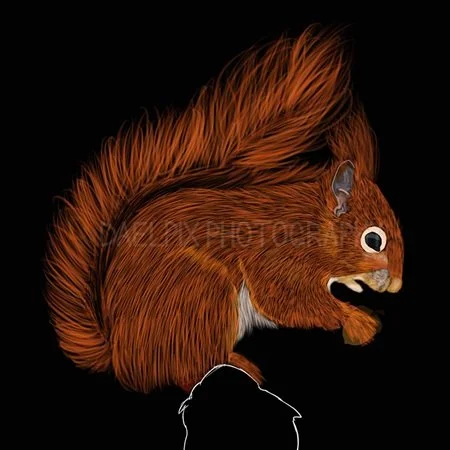
Smaller and lighter than grey squirrels, adult reds typically weigh between 250 and 350 grams, compared with the 400 to 700 grams of an adult grey squirrel. Their rich chestnut-red coat varies in colour throughout the year, with some individuals appearing almost dark brown while others display a vibrant rusty orange. During the colder months, they develop their distinctive ear tufts—long tufts of fur that give them an unmistakable appearance and help protect their ears from harsh winter weather.
Red squirrels are highly agile climbers, capable of leaping several metres between branches while using their long, bushy tails for balance. Unlike grey squirrels, they spend much of their lives in the upper canopy of woodland, where they feel most at home. They build nests known as dreys using twigs, moss, leaves and strips of bark, often constructing several within their territory to provide shelter throughout the year.
Their diet changes with the seasons and reflects the variety of food available in Britain's woodlands. Pine cones, spruce seeds, hazelnuts, beech mast, fungi, berries, tree buds and even the occasional insect all form part of their diet. During autumn they cache food beneath leaf litter or inside tree hollows, relying on these hidden stores to survive the colder winter months when fresh food becomes scarce. Although they do not remember every cache they create, the forgotten seeds often germinate, helping to regenerate forests naturally. In this way, red squirrels play an important role in maintaining healthy woodland ecosystems.
Breeding usually takes place twice a year, with females giving birth to litters of between two and five young. The young squirrels remain in the drey for several weeks before venturing out into the trees under the watchful eye of their mother. However, survival is far from guaranteed. Predators such as goshawks, pine martens, foxes and stoats all prey on red squirrels, while harsh winters and poor food availability can also reduce populations.
Today, healthy populations remain mainly in Scotland, parts of Northumberland and Cumbria, the Isle of Wight and a small number of carefully managed nature reserves. These locations have become vital refuges where conservation organisations, volunteers and land managers work tirelessly to give red squirrels the best possible chance of survival. Without continued conservation efforts, even these remaining populations could face an uncertain future.
For many people, spotting a red squirrel in the wild is an unforgettable experience. Their shy nature, striking appearance and rarity make every encounter feel special, serving as a reminder of what Britain's woodlands once looked like before grey squirrels became widespread.
How Did Grey Squirrels Arrive?
Grey squirrels (Sciurus carolinensis) are native to eastern North America, where they inhabit a wide range of deciduous and mixed forests. In their native range they live alongside numerous predators and competitors that naturally help regulate their populations, preventing numbers from increasing unchecked.
Their arrival in Britain was entirely the result of human activity.
The first recorded introduction took place in 1876 at Henbury Park in Cheshire. During the Victorian era, wealthy landowners viewed exotic wildlife as fashionable additions to their estates, and grey squirrels were imported from North America to enhance ornamental gardens and parklands. As their popularity grew, further introductions took place across England and Wales, with little understanding of the ecological consequences that would follow.
At the time, few people could have predicted the long-term impact these introductions would have. Ecology was still a developing science, and invasive species were not widely recognised as a threat to native wildlife. What appeared to be an attractive addition to country estates would ultimately become one of Britain's most successful invasive mammals.
Grey squirrels adapted exceptionally well to British conditions. They are remarkably intelligent, highly adaptable and able to exploit an enormous variety of habitats. Whether living in ancient woodlands, commercial forests, city parks or suburban gardens, they have shown an impressive ability to survive almost anywhere food is available.
Their varied diet has played a major role in their success. Grey squirrels consume acorns, hazelnuts, beech mast, chestnuts, seeds, berries, fungi, buds, insects, bird eggs and even discarded human food. Unlike red squirrels, they are able to digest the tannins found in unripe acorns, giving them access to an abundant food source long before many other woodland animals can make use of it.
Grey squirrels are also prolific breeders. In years when food is plentiful, females can produce two litters annually, allowing populations to recover quickly even after severe winters. Combined with their larger body size and ability to thrive in fragmented woodland, farmland and urban environments, this has enabled them to spread rapidly across Britain.
Over the following decades, grey squirrels expanded across much of England and Wales before gradually moving into parts of Scotland. Today they occupy millions of hectares of woodland and have become one of the most familiar wild mammals in the country.
Their success, however, has come at a considerable cost. As grey squirrel numbers increased, red squirrel populations declined almost everywhere the two species came into contact. Today, grey squirrels vastly outnumber reds throughout Britain, making the conservation of our native squirrel one of the country's greatest ongoing wildlife challenges.
Why Are Grey Squirrels Such a Serious Threat?
At first glance, it can be difficult to understand why conservationists place so much emphasis on the impact of grey squirrels. After all, both species appear to occupy similar habitats, feed on similar foods and live remarkably similar lifestyles. To many people, they simply look like two different coloured squirrels sharing the same woodland.
Unfortunately, the reality is far more complex.
The decline of Britain's red squirrel cannot be explained by a single factor alone. Instead, it is the result of several pressures acting together over many decades. Grey squirrels not only compete directly with red squirrels for food and habitat, but they also carry a deadly disease, alter woodland ecosystems through bark stripping and reproduce quickly enough to dominate many landscapes. When these factors are combined, the result is a steady decline in red squirrel populations wherever grey squirrels become established.
Understanding these threats is essential if we are to appreciate why red squirrel conservation has become such an important issue across Britain.
Competition for Food
Food is one of the most important resources for any wild animal. The ability to find enough nutritious food throughout the year determines whether an animal survives the winter, produces healthy young and maintains a stable population. Unfortunately for red squirrels, grey squirrels possess several biological advantages that make them much more successful competitors.
Grey squirrels are considerably larger and heavier than red squirrels, allowing them to store greater fat reserves before winter arrives. They are also physically stronger, enabling them to exploit a wider range of food sources that smaller red squirrels often struggle to access.
One of their greatest advantages lies in their digestive system. Grey squirrels can process the tannins found in unripe acorns, allowing them to feed on one of Britain's most abundant woodland food sources long before red squirrels can make use of it. This gives greys a significant nutritional advantage during late summer and autumn, helping them enter winter in much better condition.
Their diet is also remarkably varied. Alongside acorns, they consume hazelnuts, beech mast, chestnuts, seeds, berries, fungi, buds, flowers, insects and even bird eggs or discarded food left by people. This adaptability means they can survive in a wide range of habitats, from ancient woodlands to city parks and suburban gardens.
As grey squirrel populations increase, they consume enormous quantities of food, leaving fewer nuts and seeds available for red squirrels. During poor mast years, when trees produce fewer seeds, this competition becomes even more intense.
The consequences are gradual but severe. Red squirrels may struggle to build sufficient fat reserves before winter, females may produce fewer young and juvenile survival rates often decline. Over time, red squirrels are forced into less favourable habitats, particularly conifer woodlands, where grey squirrels are less successful. Eventually, local red squirrel populations disappear altogether.
Squirrelpox Virus
While competition for food places red squirrels under constant pressure, squirrelpox virus is perhaps the single greatest reason why populations collapse so rapidly once grey squirrels arrive.
The virus is carried naturally by many grey squirrels without causing serious illness. They have evolved alongside it over thousands of years and possess a natural resistance, meaning infected animals often show little or no outward signs of disease. As a result, apparently healthy grey squirrels can unknowingly spread the virus wherever they go.
For red squirrels, however, the situation is very different.
Having never evolved alongside squirrelpox, red squirrels possess virtually no natural immunity. Once infected, the disease progresses rapidly and is almost always fatal.
The first signs usually include sores around the eyes, nose, mouth and paws. These lesions soon become painful ulcers that make feeding, climbing and grooming increasingly difficult. As the infection spreads, affected squirrels become weak, dehydrated and vulnerable to secondary infections. Most die within two to three weeks of developing symptoms.
The virus can spread through direct contact between squirrels, contaminated feeding stations and shared food sources. This means that even a relatively small number of infected grey squirrels entering a red squirrel territory can trigger an outbreak.
The impact can be devastating. Conservationists have documented cases where entire local populations disappeared within a matter of months following squirrelpox outbreaks. In some areas, decades of conservation work have been undone in a single season.
For this reason, preventing squirrelpox from reaching isolated red squirrel populations remains one of the highest priorities for conservation organisations across Britain.
Woodland Damage
The problems caused by grey squirrels extend far beyond their impact on red squirrels alone.
Every year, grey squirrels cause extensive damage to Britain's broadleaf woodlands through a behaviour known as bark stripping. This typically occurs during late spring and early summer when the sap beneath the bark is flowing most freely.
Grey squirrels strip away sections of bark using their powerful front teeth, exposing the living tissue beneath. Although researchers are still studying exactly why they do this, it is believed to provide access to nutrient-rich sap while also helping meet their mineral requirements.
Unfortunately, the consequences for the tree can be severe.
Species such as oak, beech, sycamore, maple, sweet chestnut and hornbeam are particularly vulnerable. Once the protective bark has been removed, trees become exposed to fungal diseases, bacterial infections and wood-boring insects. Repeated bark stripping weakens the tree, reduces timber quality and can eventually kill young trees altogether.
This damage presents a significant challenge for foresters and woodland managers. Trees that have taken decades to grow may become unsuitable for commercial timber, reducing their economic value and limiting future woodland productivity.
The effects ripple throughout the ecosystem. Damaged trees provide poorer nesting opportunities for birds, reduce habitat quality for insects and mammals, and alter the overall structure of woodland habitats. Healthy forests support an incredible diversity of wildlife, so protecting trees benefits far more than squirrels alone.
It is estimated that bark stripping by grey squirrels costs Britain's forestry sector millions of pounds every year, making them one of the country's most economically damaging mammal species.
What Is Being Done?
Despite the challenges, there is genuine hope for Britain's red squirrels.
Across the country, conservation organisations, wildlife trusts, forestry agencies, landowners and thousands of dedicated volunteers work together to protect the remaining populations. Their efforts combine scientific research with practical woodland management to give red squirrels the best possible chance of survival.
Conservation work takes many forms.
Woodland managers carefully restore and maintain habitats that favour red squirrels, particularly conifer forests where grey squirrels are generally less successful. Rangers regularly monitor squirrel numbers, track the spread of squirrelpox virus and record breeding success to identify changes in local populations.
In many key conservation areas, legal and humane grey squirrel control forms part of a wider management strategy designed to reduce pressure on vulnerable red squirrel populations. While this approach is sometimes controversial, studies have shown it can significantly improve the chances of red squirrels surviving where the two species would otherwise compete.
Researchers are also exploring innovative long-term solutions. Work continues on squirrelpox vaccines, fertility-control methods and improved disease monitoring techniques that may one day provide additional tools for conservation.
Public education remains equally important. Helping people understand why red squirrels have declined encourages greater support for conservation projects and dispels many of the myths surrounding both species.
Thanks to these combined efforts, several red squirrel populations have stabilised and, in some areas, begun to recover. Although the challenges remain significant, these successes demonstrate that well-managed conservation programmes can make a real difference.
How You Can Help
Protecting Britain's wildlife is not solely the responsibility of scientists and conservation organisations. Everyone who enjoys spending time outdoors can make a valuable contribution.
If you are fortunate enough to spot a red squirrel, consider reporting the sighting to your local wildlife trust or county biological records centre. These records help conservationists monitor population trends, identify important habitats and respond quickly to emerging threats.
Supporting organisations dedicated to red squirrel conservation—whether through donations, volunteering or simply raising awareness—also plays an important role. Many conservation projects rely heavily on volunteers who help monitor populations, restore woodland habitats and educate local communities.
If you feed garden birds, keeping feeding stations clean can also help reduce the spread of disease between wildlife species. Following local guidance where red squirrels are present is particularly important.
Perhaps the simplest way to help is by learning more about Britain's native wildlife and sharing accurate information with others. The more people understand the challenges facing red squirrels, the greater the public support for the conservation work needed to protect them.
A Difficult but Necessary Conversation
Wildlife conservation often involves difficult decisions, particularly when the interests of one species conflict with those of another. Few topics generate more debate than the management of grey squirrel populations.
Many people understandably feel uncomfortable with the idea of controlling any wild animal. Grey squirrels are attractive, intelligent and familiar to millions of people, particularly those who encounter them regularly in parks and gardens. However, conservation decisions are rarely based on appearance or popularity alone. They are based on protecting biodiversity and preserving native ecosystems for future generations.
The evidence shows that where grey squirrels become established, red squirrels almost always decline unless effective conservation measures are put in place. Habitat restoration, public education and scientific research are all essential parts of the solution, but in many areas they cannot succeed on their own while grey squirrel populations remain high.
For this reason, many conservation organisations, woodland managers and forestry professionals support legal, humane grey squirrel population management as part of a broader conservation strategy. Depending on local circumstances, this may involve approved live-capture traps followed by humane dispatch, or shooting carried out safely, responsibly and in accordance with UK wildlife laws. These measures are intended to reduce pressure on vulnerable red squirrel populations rather than eliminate grey squirrels entirely.
Another aspect that receives relatively little public attention is that grey squirrels are an edible wild game species. Their meat is lean, high in protein and, when prepared correctly, is often compared to rabbit or dark chicken. Many hunters and conservationists believe that using the animal for food is a respectful way to ensure it is not wasted, reflecting the broader countryside principle of making full use of harvested wild game.
Ultimately, saving Britain's red squirrels will require long-term cooperation between conservation groups, researchers, landowners, foresters, volunteers, policymakers and members of the public. There is no single solution to the problem, but evidence suggests that responsible woodland management, habitat restoration, disease monitoring and, where appropriate, humane grey squirrel control together provide the best opportunity to protect one of Britain's most iconic native mammals.
If future generations are to experience the excitement of seeing a wild red squirrel darting through the treetops, we must continue supporting conservation measures that are grounded in sound science, carried out responsibly and focused on restoring balance to our woodlands.
Red squirrels have been part of Britain's natural heritage for thousands of years. Whether you're an angler waiting beside a quiet river, a wildlife photographer exploring ancient forests, or simply someone who enjoys spending time in the countryside, their future should matter to all of us. Protecting them is about far more than saving a single species—it is about preserving the rich biodiversity that makes Britain's landscapes so special.
— David